Menu

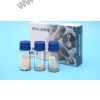
Oral restoration membrane/xenogeneic acellular dermal matrix/raw material supply

{{ product.price_format }}
{{ product.origin_price_format }}
Quantity:
Sales: 420
SKU:{{ product.sku }}
Model: {{ product.model }}
weight: {{ product.weight }} Kilogram

{{ variable.name }}

{{ value.name }}
Product Inquiry

An oral restoration membrane (also commonly referred to as a dental barrier membrane) is a critical biomaterial used in guided tissue regeneration (GTR) and guided bone regeneration (GBR) procedures in dentistry. Its primary function is to act as a physical barrier that prevents the rapid ingrowth of epithelial cells and connective tissue into a bone defect or extraction socket, thereby creating a protected space for slower-migrating osteogenic cells (bone-forming cells) to regenerate lost periodontal or alveolar bone.


🔬 1. Purpose & Clinical Indications

Application Purpose
Periodontal GTR Regenerate bone, cementum, and periodontal ligament in intrabony defects caused by periodontitis
Alveolar Ridge Preservation (Socket Grafting) Prevent post-extraction bone resorption after tooth removal
Sinus Lift Procedures Stabilize bone graft material in the maxillary sinus
Horizontal/Vertical Ridge Augmentation Rebuild deficient jawbone for dental implant placement
Treatment of Peri-implant Defects Regenerate bone around failing implants

🧪 2. Types of Oral Restoration Membranes

A. Non-Resorbable Membranes

  • Material: Expanded polytetrafluoroethylene (ePTFE), titanium mesh, titanium-reinforced PTFE
  • Pros: Excellent space maintenance, predictable results
  • Cons: Requires second surgery for removal; risk of exposure and infection
  • Example: Gore-Tex® (ePTFE)

B. Resorbable (Absorbable) Membranes (Most Commonly Used Today)

  • Collagen-based (Xenogeneic or Bovine):
    • Derived from bovine/porcine tendon or skin
    • Biocompatible, promotes clot stabilization, hemostatic
    • Naturally degrades in 4–12 weeks
    • Examples: Bio-Gide®, CollaTape®, Ossix® Plus
  • Synthetic Polymers:
    • Polylactic acid (PLA), polyglycolic acid (PGA), or their copolymer (PLGA)
    • Degradation time: 6–24 weeks (tunable)
    • Less inflammatory than collagen in some cases
    • Examples: Resolut® Adapt, Vicryl Mesh (off-label)
✅ Collagen membranes dominate clinical use due to ease of handling, biocompatibility, and no need for removal.

🌐 3. Key Properties of an Ideal Membrane


Property Importance
Biocompatibility No toxic or immune reaction
Cell Occlusivity Blocks fibroblasts/epithelium but allows nutrient diffusion
Space-Maintaining Ability Resists soft tissue collapse into defect
Clinical Manageability Easy to cut, adapt, and suture
Degradation Profile Matches bone healing timeline (~4–6 months)
Integration with Graft Works synergistically with bone graft materials

🦷 4. Common Clinical Workflow (e.g., Socket Preservation)

  1. Tooth extraction with minimal trauma
  2. Debridement of granulation tissue
  3. Placement of bone graft (e.g., xenograft, allograft) into socket
  4. Covering with collagen membrane (e.g., Bio-Gide®)
  5. Primary closure of gingiva (if possible) or use of protective dressing
  6. Healing: 4–6 months before implant placement
💡 The membrane stabilizes the blood clot, protects the graft, and directs bone regeneration.

⚠️ 5. Potential Complications

  • Membrane exposure: Most common issue → risk of infection and graft failure
  • Inadequate space maintenance: Leads to poor bone volume
  • Premature degradation: Before bone has formed
  • Inflammatory response: Rare with modern purified collagen

📈 6. Market & Innovation Trends

  • Cross-linked collagen membranes: Longer degradation (e.g., Ossix® Plus – uses photo-oxidation)
  • Bilayer membranes: Dense layer (blocks cells) + porous layer (promotes integration)
  • Growth factor-loaded membranes: e.g., with BMP-2 or PDGF to enhance regeneration
  • 3D-printed personalized membranes: Emerging research area

✅ Summary

An oral restoration membrane is an essential tool in modern regenerative dentistry. Resorbable collagen membranes are the gold standard due to their biocompatibility, ease of use, and ability to support predictable bone and tissue regeneration without requiring removal. Proper case selection, surgical technique, and soft tissue management are key to success.


If you're looking for product comparisonsclinical guidelines, or histological evidence of specific membranes (e.g., Bio-Gide vs. Jason®), let me know!


Upload a JPG or PNG image. 300 x 300 is recommended.
Only jpg/jpeg/png/mp4/mov files can be uploaded, and it should not exceed 50M
Submit Cancel
Add Reviews
Add Reviews
{{ item.user_name_format }}

{{ item.content }}

{{ item.created_at_format }}

Reply:

{{ item.reply }}

Related Products
Laparoscopic surgical instrument separation forceps (bent) 45° 10MMX330MM
SELF
Laparoscopic surgical instrument separation forceps (bent) 45° 10MMX330MM
$90.00 $700.00
Sales:877
Spinal endoscope - Ligamentum flavum biting and cutting forceps - 4.0mm x 260mm -0°
SELF
Spinal endoscope - Ligamentum flavum biting and cutting forceps - 4.0mm x 260mm -0°
$400.00 $600.00
Sales:815
Nasal surgical instruments - mushroom forceps
SELF
Nasal surgical instruments - mushroom forceps
$350.00 $600.00
Sales:992
ACL/PCL device kit
SELF
ACL/PCL device kit
$300.00 $1,200.00
Sales:826

CONTACT US

To find out more about our products and solutions, please fill out the form below and one of our experts will get back to you shortly.